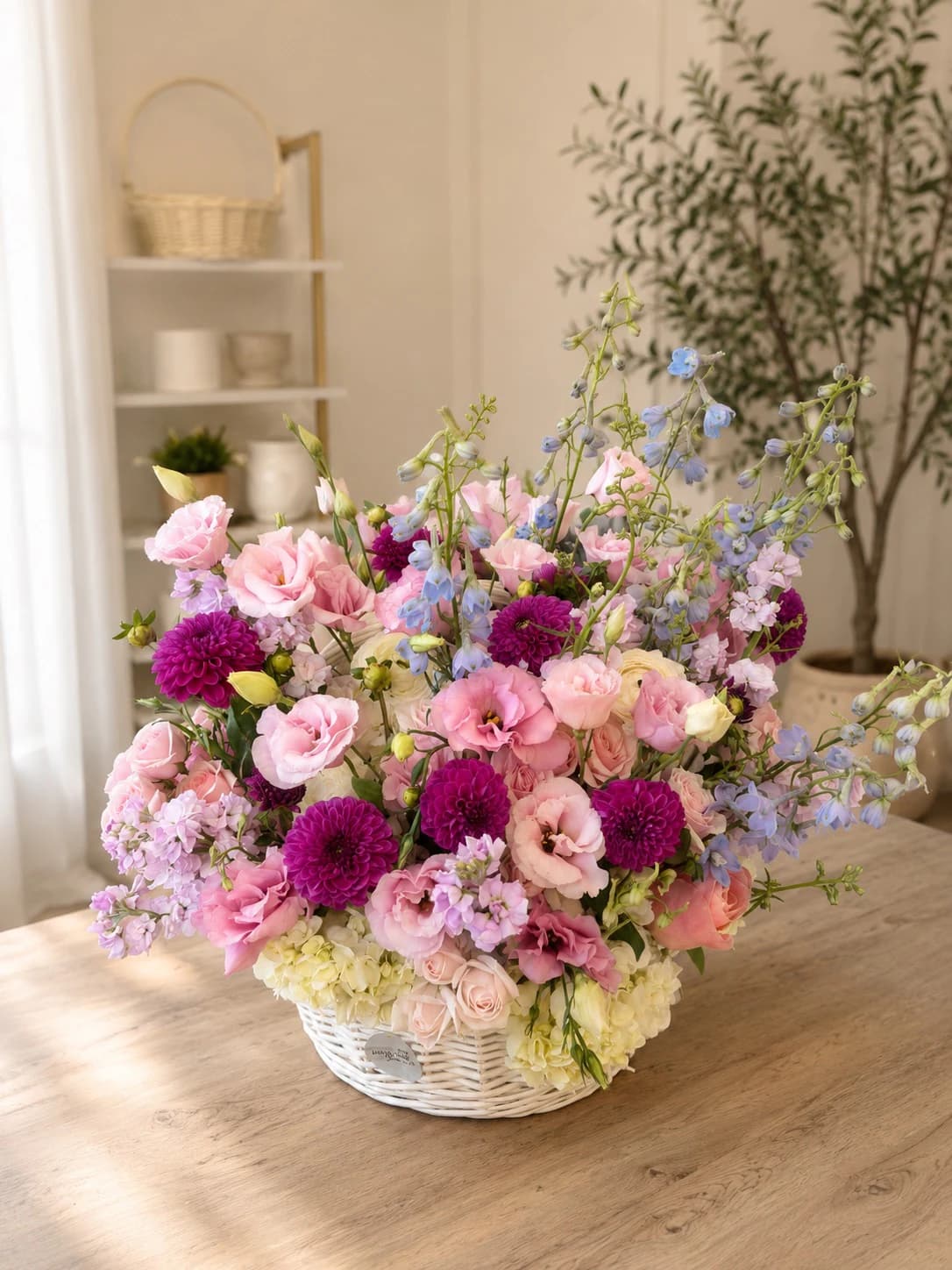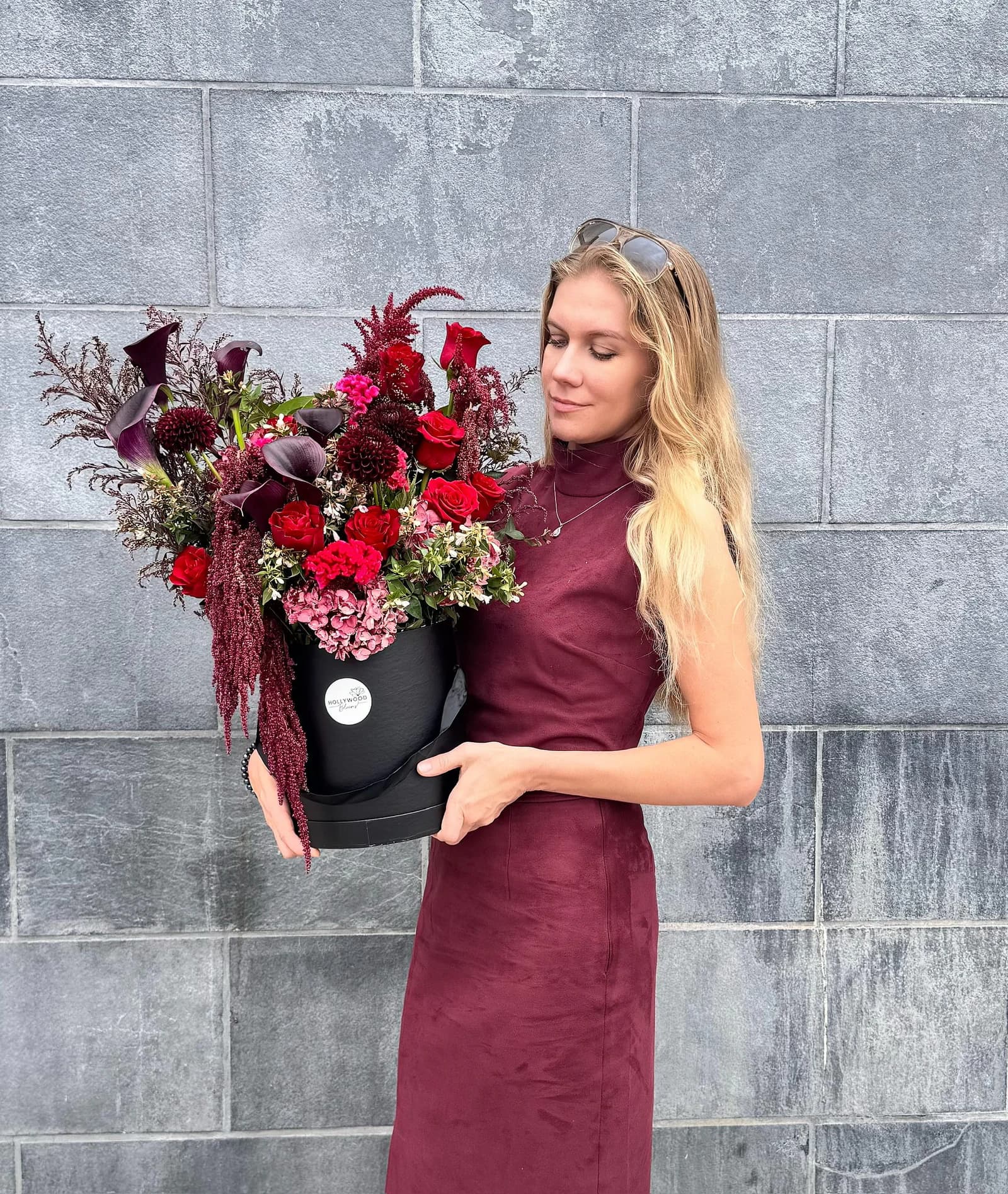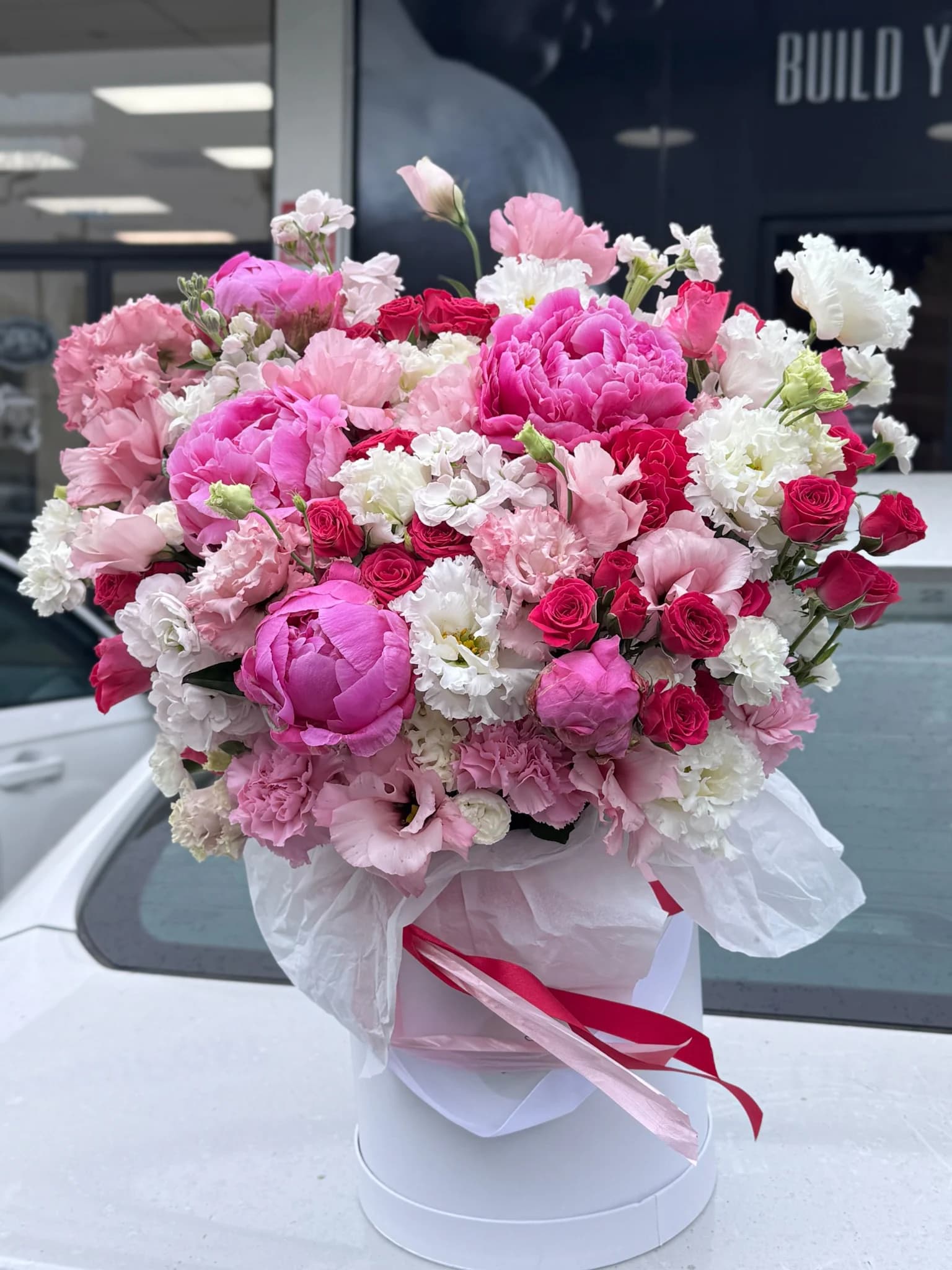
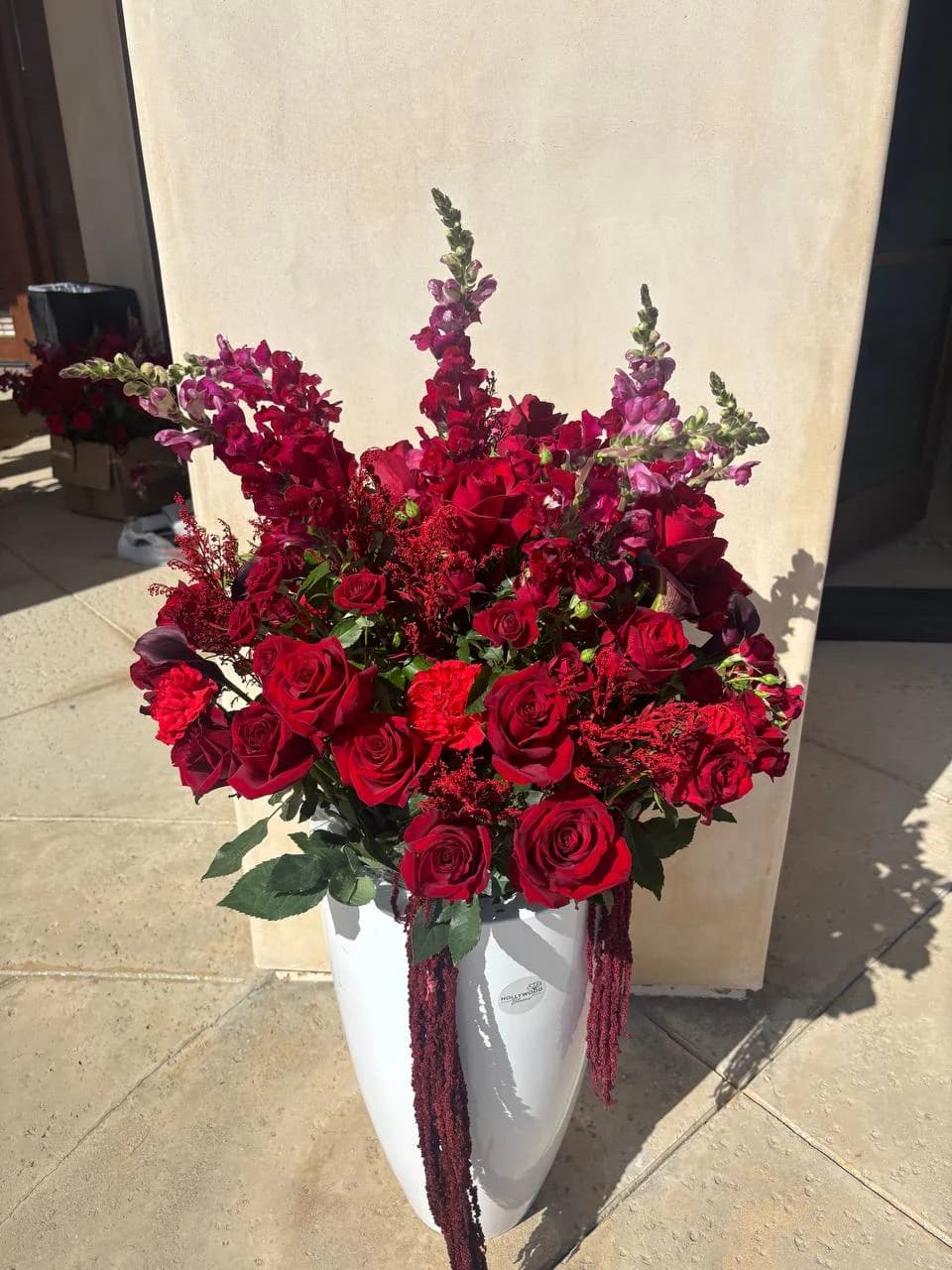
The secret to learning how to arrange roses is not adding more roses. It is giving each bloom a role. A few roses create the outline, several build the focal area, and the rest connect the shape. Small changes in height and direction make the arrangement feel generous instead of packed.
This method works with one color or a mixed palette, standard roses or garden roses, and a compact vase or larger centerpiece.
Prepare roses without damaging them
Remove leaves that will fall below the waterline and any bruised outer guard petals that clearly detract from the bloom. Keep healthy upper foliage if it supports the design. Recut the stems with sharp snips and hydrate them in clean water before arranging.
Do not force a tight rose open or reflex petals that are still rigid. Flowers respond differently depending on variety and maturity. Let the natural bloom stage guide how open and sculptural the design should be.
Choose a rose arrangement style
For a clean monochromatic look, use roses of one color and rely on height changes for depth. For a garden style, add a few textural stems and delicate greenery. For a dramatic statement, use stronger asymmetry and allow a small number of roses to extend beyond the main mass.
The vase changes the result. A low bowl feels lush and centerpiece-like; a taller cylinder creates a more vertical design; a narrow neck gathers stems naturally and is easiest when you have fewer flowers.
Arrange roses step by step
Rotate the vase after every two or three stems. You are building a three-dimensional design, even if one view will become the primary front.
- 1. Set the heightPlace one or two roses to establish the tallest point and overall direction.
- 2. Create the perimeterAngle several roses outward around the vase to define width.
- 3. Build the focal areaCluster a few blooms near the center at different depths rather than making a perfect ring.
- 4. Fill selectivelyAdd the remaining roses only where the eye needs connection or color.
- 5. Finish with textureUse a limited amount of foliage or small flowers, then remove anything that hides the roses.
If the roses keep falling to the outside of a wide vase, make a simple grid across the clean rim with clear floral tape before adding water.
Rose care after arranging
Keep the vase cool and out of direct sunlight. Change the water and clean the container regularly, recutting the stems when you refresh it. Remove any flower that declines early so it does not affect the water quality for the rest.
Want to combine roses with other flowers? Start with our bouquet-making guide and treat the roses as your focal blooms. The remaining flowers should support their color and form rather than compete with them.