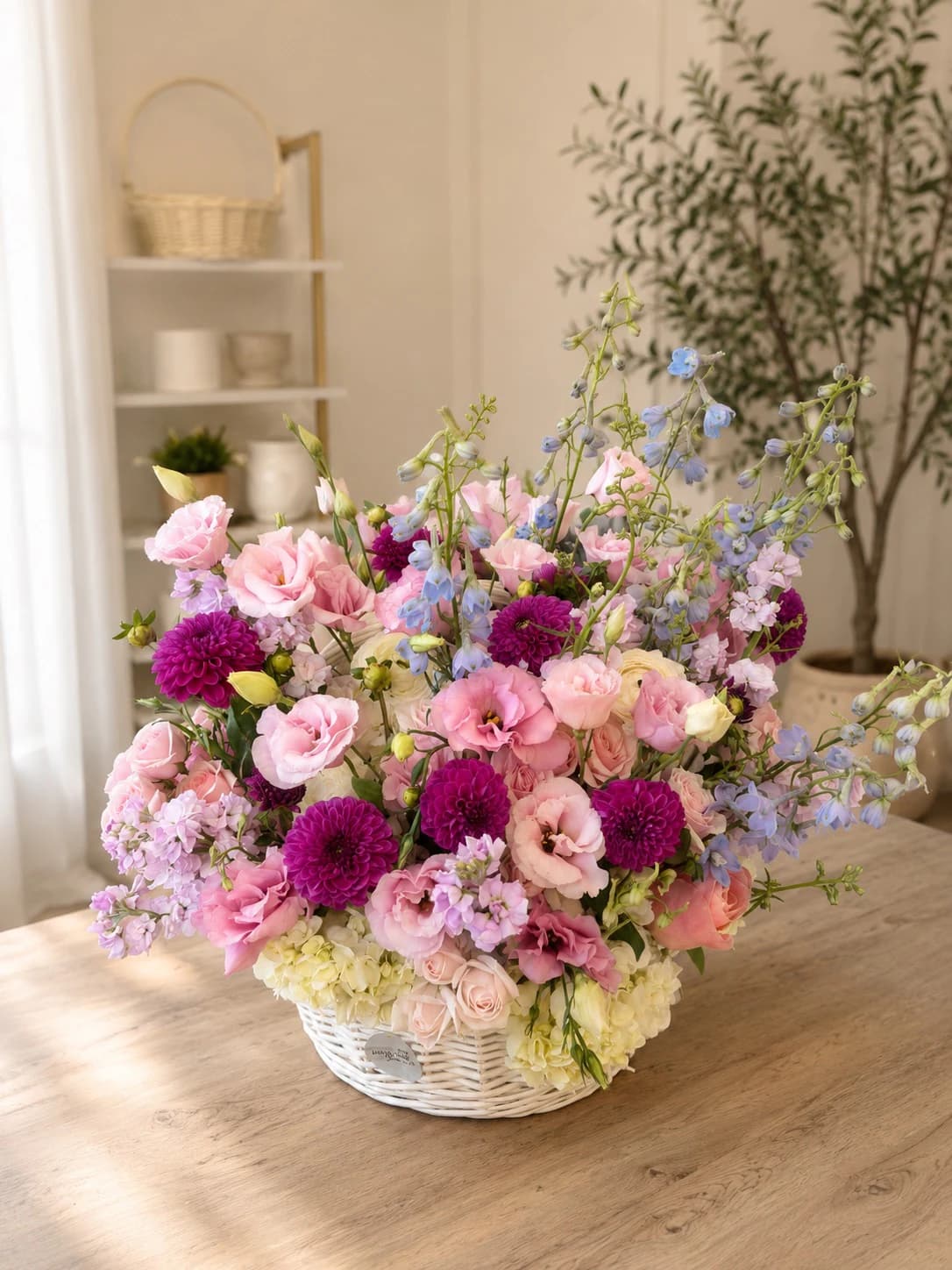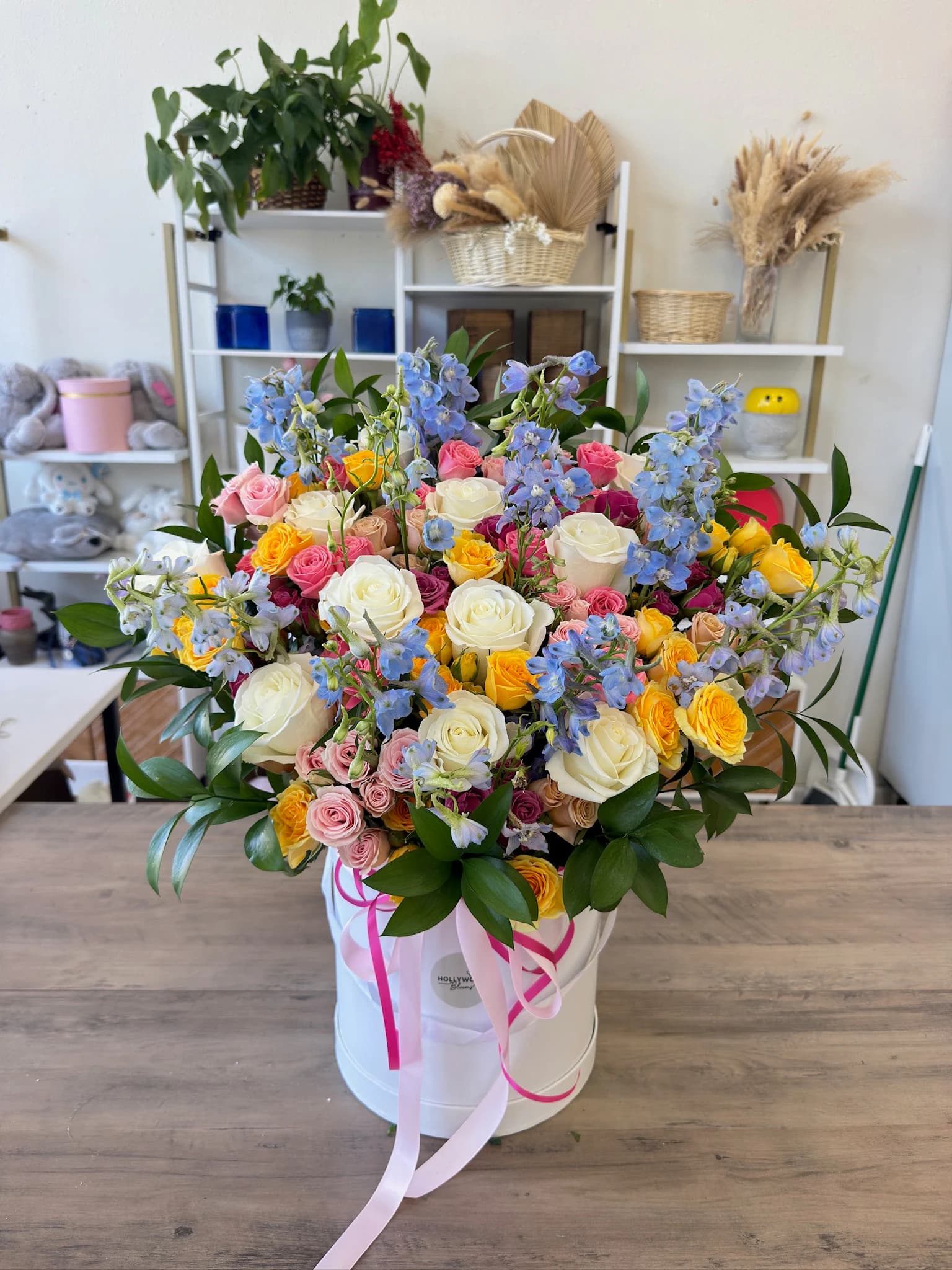
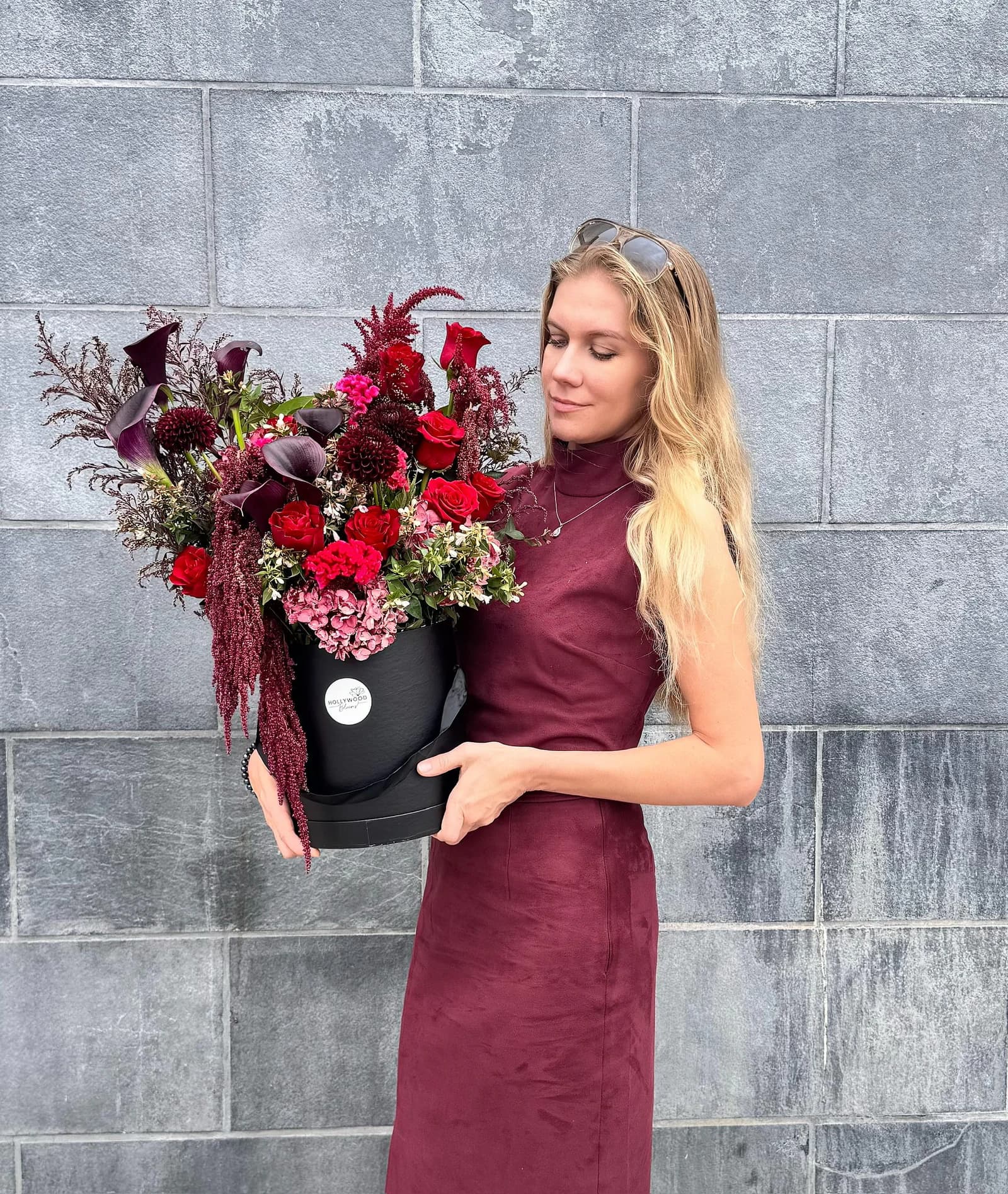
Flower arranging for beginners becomes much easier once you know what to look for. The goal is not perfect symmetry or squeezing every flower into the vase. It is creating a clear shape, a visual path, and enough space for the best blooms to stand out.
Use these nine basics as a checklist, then let your own taste take over. A strong arrangement can be minimal, abundant, monochromatic, wild, or formal—as long as the choices feel deliberate.
Start with preparation, not placement
Wash the vase, fill it with fresh water, and prepare the stems before designing. Remove submerged foliage, recut the stems, and separate flowers by type. This quiet setup prevents the arrangement from becoming a race against wilting stems.
Choose a vase with an opening that supports the amount of material you have. A very wide opening makes a small bunch collapse outward; a narrow neck can crowd a generous bouquet. As a starting point, let the total arrangement height feel about one and a half times the visible vase height, then adjust for the flower and style.
The nine basics to practice
You do not need to master all nine at once. Pick two—such as shape and color—on your first arrangement, then add another idea next time.
- 1. ShapeDecide whether the silhouette will be round, loose and garden-like, tall, or asymmetrical.
- 2. ProportionMatch the flower volume to the vase so neither feels visually overwhelmed.
- 3. Focal pointGive the eye one or two areas of emphasis instead of making every bloom compete.
- 4. RhythmRepeat a color or flower in a few places so the eye travels through the design.
- 5. DepthPlace some blooms forward and others deeper rather than forming one flat surface.
- 6. ColorStart with one dominant color, one supporting color, and a smaller accent.
- 7. TextureCombine smooth petals, airy details, and foliage to avoid visual sameness.
- 8. MovementUse curved or gestural stems where their natural line can be appreciated.
- 9. EditingRemove a flower if it blocks a better one or makes the outline feel heavy.
An easy order for arranging flowers
First create the outer shape with foliage or line flowers. Add the largest focal blooms next, then supporting flowers, then small textural details. Rotate the vase often. The back of an arrangement still matters unless it will sit permanently against a wall.
If the design looks busy, group two or three flowers of the same variety instead of alternating every stem. If it looks stiff, vary the heights and let one or two stems break the outline. If it looks empty, check the center before adding more to the outside.
Take a phone photo midway through. A flat image often reveals crowded areas or an uneven silhouette faster than staring at the arrangement in person.
The best way to learn floral design
Practice with flowers you genuinely like, not an imagined perfect shopping list. Seasonal availability changes, and adapting to the best stems in front of you is part of floral design.
You can learn at home with our step-by-step bouquet guide, or practice in person with a florist who can correct mechanics and proportion while you work. Our beginner classes include the flowers, tools, and arrangement you take home.